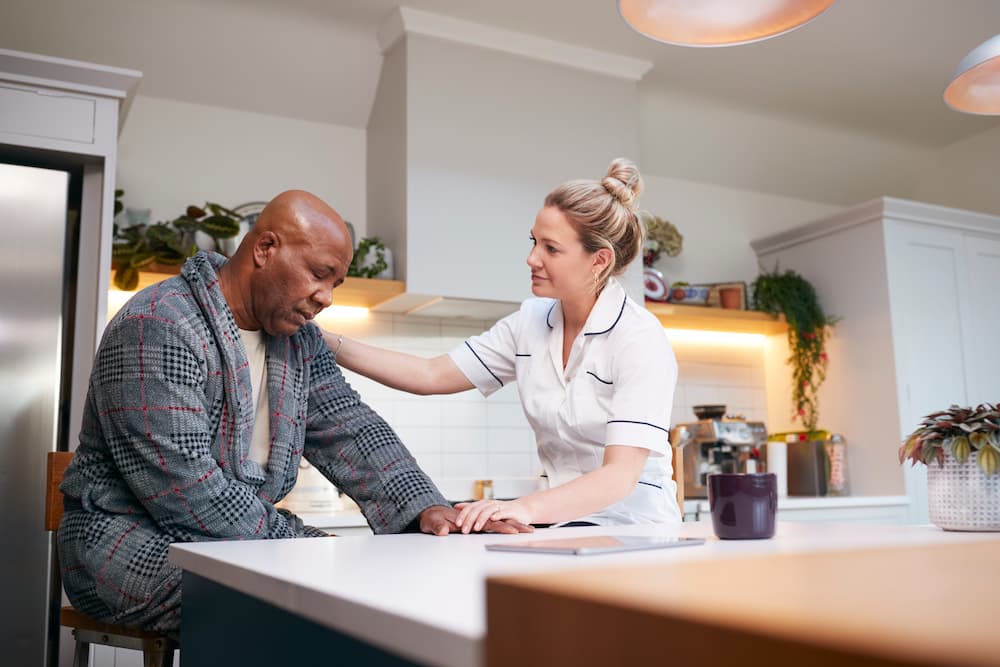
When people think about receiving care in their own home after illness, surgery or as they age, many assume that the National Health Service or local authority services will cover every need. In truth, the landscape of home care in the the UK comprises a variety of public, semi‑public, and private options.
Each has its role, its constraints, and its strengths. In this article we explore how NHS and publicly funded services operate, what private home care offers, and when one might choose (or combine) both.
Understanding NHS / Publicly Funded Home Care
To begin, let us clarify what is meant by “NHS or public home care.” Though terminology can vary across regions (England, Scotland, Wales, Northern Ireland), these services broadly include:
Reablement / intermediate care: short‑term support after hospital discharge, intended to help you regain independence in daily tasks like washing, dressing or preparing meals. In England, for instance, many people are eligible for up to six weeks of free reablement services, subject to local availability.
Community nursing / district nursing: nursing care delivered at home such as wound care, injections, clinical monitoring, that remains under NHS or health board provision.
Discharge to assess or “home‑first” programmes: in many areas, patients may return home earlier, with assessments carried out in their own environment.
Local authority social care: beyond purely medical needs, local councils may offer home support services, help with personal care, domestic chores, or mobility, but only after a needs assessment, means testing, and subject to budget constraints.
These services are vital and form the backbone of post‑hospital care for many. Their advantages include public funding (or subsidised cost) and integration with other health services. But they also face limitations.
Limitations and Constraints
Because these services are demand‑driven and resources are finite, they typically:
- Are time-limited in duration. Reablement care is often offered for a few weeks only, not indefinitely.
- May have waiting lists or delayed initiation, due to staffing, assessment backlogs or funding constraints.
- Focus primarily on medical or functional recovery, not always catering to preferences, lifestyle support or continuity of carers.
- May come with eligibility criteria (clinical need, means testing, geographic service catchment).
- Often rotate staff, making continuity more difficult.
Because of these constraints, many individuals and families turn to private care to fill the gaps or extend support beyond what public provision can deliver.
What Is Private Home Care?
Private home care refers to services arranged directly by an individual or family, usually on a fee-for-service or contract basis. Providers like Quarry Homecare deliver personal care, assistance with everyday tasks, companionship, and other support tailored to the person’s needs.
Key features of private home care:
Flexibility in scheduling and duration: You decide how many visits, at what times, and whether live‑in or overnight care is required.
Consistency and continuity of carer(s): Many private agencies use small, dedicated teams so the person is seen regularly by familiar staff.
Choice and personalisation: You can often specify preferences (e.g. caregiver gender, language, routine).
Rapid mobilisation: Private services may be able to start within 24 to 72 hours, particularly for urgent cases.
Supplementing public services: Private care is not always a replacement. It can complement NHS or social care provision, for instance by covering meal preparation, light domestic tasks or emotional support even when NHS staff attend for clinical tasks.
It is vital, however, that private care providers operate within regulated frameworks to ensure safety, professionalism and legal compliance.
Key Differences: NHS / Public Care Versus Private Home Care
To help illustrate, here is a comparison of major dimensions:
| Dimension | NHS / Public Home Care | Private Home Care |
| Eligibility | Based on health or social care criteria, and subject to assessment | Open to anyone who can engage and pay for services |
| Start and access | May require assessment, waiting, or limited availability | Often faster, with capacity for urgent start |
| Duration | Usually limited (e.g. weeks of reablement) | Can be sustained long term according to need and budget |
| Scope of care | Typically medically or functionally focused | Broader—personal care, social support, companionship, home tasks |
| Carer continuity | Shift rotations, multiple carers | More ability to allocate consistent caregivers or small team |
| Control over visits | Fixed by service schedule and resource availability | You determine times, frequency, and care plan adjustments |
| Cost to individual | Often free or subsidised (subject to means testing) | Paid privately or via means such as personal budgets |
| Integration with NHS / public services | Often directly integrated or coordinated | Must liaise with NHS / local services (if applicable) to avoid duplication |
This difference in flexibility, continuity and personalisation is where private home care often adds greatest value, especially in transition periods or longer-term care needs.
When Private Home Care Is Particularly Advantageous
Private home care shines in certain circumstances:
After discharge or a fall when NHS reablement is slow to start
If the public reablement service is delayed or cannot meet demand, private care can fill the gap and provide continuity of support.
For enhanced consistency and continuity
If it matters that the same carer or small team provides care routinely, private care offers more option.
For extended hours or overnight support
NHS or public services may not provide around‑the‑clock coverage, whereas private services can.
For personalised preferences
You may want to align care visits around personal routines, hobbies or cultural practices, which public services may not allow.
To augment public care in a mixed model
Private carers may handle domestic tasks, meal preparation or companionship while NHS teams focus on clinical or medical tasks.
To maintain dignity and control
Many people prefer to maintain autonomy over how, when and by whom care is delivered.
It is not a question of replacing the NHS, but choosing the most suitable arrangement for your circumstances.
Funding and Financial Considerations
Because private home care is typically self-funded, it is important to understand cost and funding mechanisms:
Self-funding: Many clients pay directly from savings, pensions or income.
Direct payments or personal budgets: If you are assessed by your local authority and eligible, you may be able to direct public funds to a private provider.
Welfare benefits: Some clients use benefits (e.g. Attendance Allowance, Personal Independence Payment) to contribute.
NHS Continuing Healthcare (CHC): In limited cases, those with predominantly health needs may qualify for fully funded NHS care, which may include care at home.
Private insurance / care policies: If you hold a care insurance plan, that may cover private home care costs.
Quarry Homecare can support you in exploring eligibility, structuring payment plans, and liaising with public services.
How Private and Public Home Care Work Together
It’s important to emphasise that choosing private home care does not mean you must abandon NHS or social care services. In many cases, the two can complement each other. For instance:
NHS or community nurses may continue to visit for clinical care, while private carers attend for daily living tasks.
After an initial period of publicly funded reablement, private care may take over longer-term support.
Private care providers often collaborate with discharge teams, GPs and other public services to ensure continuity, avoid duplication and manage transitions.
When your needs change, public assessments may be revisited, and a hybrid arrangement can be developed.
In this way, private care can offer flexibility and continuity without conflict.
Why Quarry Homecare Makes a Strong Private Partner
Quarry Homecare is built around the core values of reliability, responsiveness and personalisation. Our strengths include:
Rapid mobilisation: We aim to commence care within 24–72 hours, especially for urgent cases.
Regulated, compliant service: We are registered, adhere to legal standards and prioritise safety, safeguarding and quality
Dedicated care teams: We strive to assign consistent carers, reducing turnover and familiarisation time.
Flexible care plans: We adapt to evolving needs, whether increasing or reducing hours, night care, or weekend service.
Collaborative working: We liaise with NHS, social services and relevant health professionals to provide integrated, seamless care.
In practice, many clients find that private home care offers both the adaptability and consistency lacking in current system constraints.
Choosing the Right Option for You
There is no one-size-fits-all answer when comparing NHS home care services with private home care. Public services offer essential, subsidised, medically integrated support with care standards and coverage. Private care, however, provides enhanced flexibility, personalisation, continuity and faster access, especially in transitional and longer-term care needs.
If you are considering home care for yourself or a loved one, begin by assessing what short-term public services may be available, then evaluate private options by their responsiveness, regulation, continuity and alignment with your preferences.
If you would like help comparing your options or obtaining a tailored care plan, Quarry Homecare is here to assist you with expert guidance and reliable private home care services.